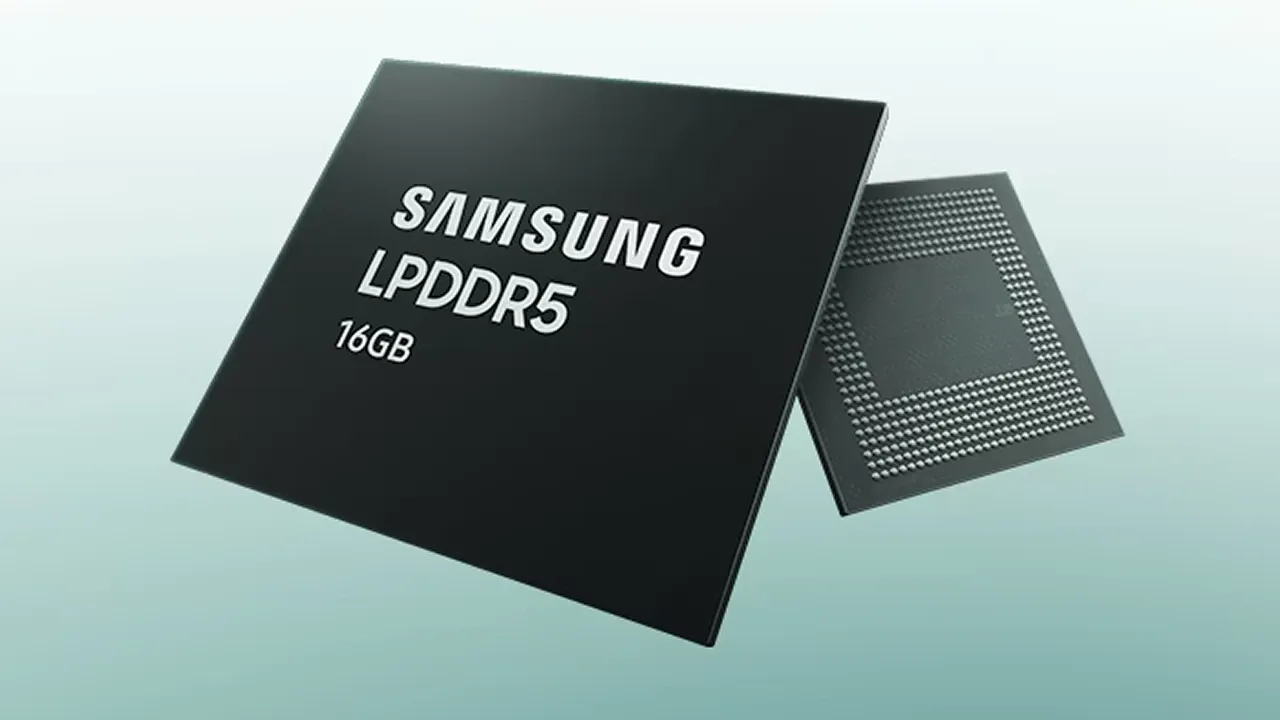
Samsung is moving its smartphone lineup toward faster LPDDR5 RAM as it phases out LPDDR4 and LPDDR4X memory. The transition brings a notable jump in bandwidth, from roughly 4.3Gbps to up to 6.4Gbps, which could improve performance by close to 50% in supported devices.
This shift is already affecting upcoming models such as the Samsung Galaxy A17, where different production batches may use different memory types. The change matters now because it directly impacts real-world performance in mid-range phones, a segment that has traditionally relied on older RAM standards.
Samsung LPDDR5 Upgrade Strategy
Samsung Electronics has reportedly stopped accepting new orders for LPDDR4X and LPDDR4 memory. Existing orders will continue to be fulfilled through the end of the current production cycle, after which manufacturing lines are expected to transition toward newer memory technologies.
The company is shifting focus to LPDDR5, which offers higher bandwidth and improved efficiency. However, the transition is not expected to be immediate across all devices, as it depends on remaining inventory and supply chain adjustments.
Performance and Hardware Changes
LPDDR5 delivers significantly faster data transfer speeds compared to LPDDR4X, enabling smoother multitasking, quicker app loading, and improved handling of demanding workloads such as gaming and AI-based features.
Devices like the Galaxy A17 are positioned within this transition phase. Early units may still ship with LPDDR4X, while later batches could adopt LPDDR5. This creates a scenario where identical models may differ in performance depending on their production timing.
Manufacturing Shift and Industry Impact
Samsung is restructuring its semiconductor production, including facilities such as its Hwaseong complex, to prioritize higher-demand memory products. This includes reallocating capacity away from older DRAM technologies toward newer, more advanced chips.
The shift also affects chipset makers like Qualcomm and MediaTek, whose existing mid-range processors often rely on LPDDR4X. Future chip designs are expected to align more closely with LPDDR5 compatibility as supply changes.
Real-World Impact for Users
For users, the move means faster performance is likely to reach more affordable smartphones. Everyday tasks such as switching between apps, background processing, and gaming should benefit from increased memory bandwidth.
At the same time, differences between early and later production units of the same phone could lead to inconsistent user experiences. There may also be cost implications as newer memory technologies are typically more expensive to produce.
The transition reflects a broader industry trend toward higher-performance components, driven in part by increasing demand for AI-capable hardware. As LPDDR4X supply declines, other smartphone manufacturers are expected to adopt LPDDR5 across their product ranges.
This shift could narrow the performance gap between mid-range and flagship smartphones, particularly in areas related to memory-intensive tasks.
The transition depends heavily on inventory cycles, meaning not all devices will switch at the same time. Compatibility with existing chipsets may also limit how quickly manufacturers can adopt LPDDR5 across all models.
Additionally, while performance improvements are clear, the exact impact will vary depending on device configuration and software optimization.
Samsung’s move away from LPDDR4X marks a clear shift in smartphone memory standards. The adoption of LPDDR5 is expected to improve performance across a wider range of devices, though the transition period may introduce variations between units and potential cost adjustments.