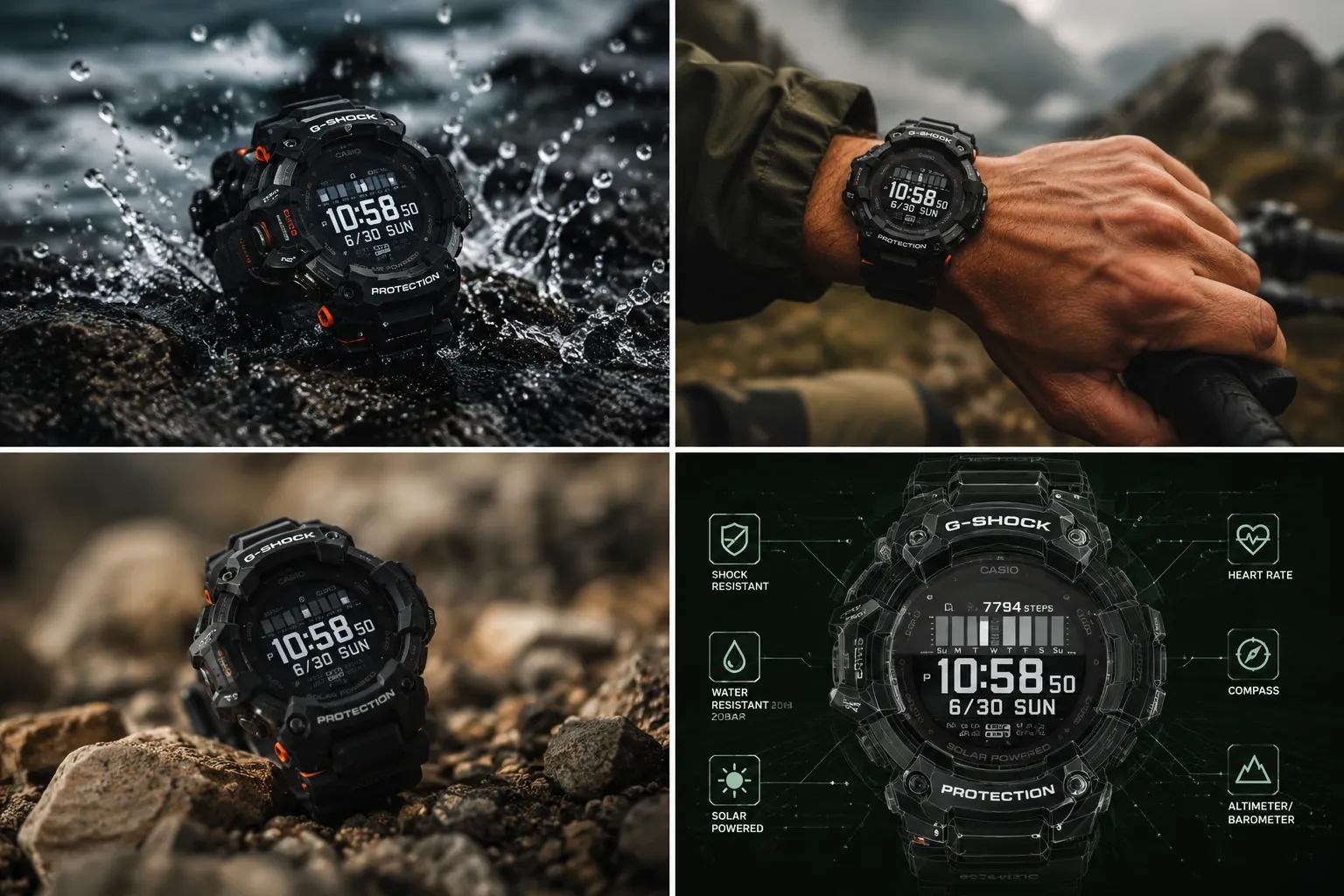
The Casio G-Shock and Apple Watch Ultra 3 represent two very different approaches to rugged wristwear. While the G-Shock lineup focuses on durability, long battery life, and dependable outdoor performance, the Apple Watch Ultra 3 combines a rugged design with advanced health tracking, fitness features, and smartwatch capabilities. Choosing between them depends largely on how you plan to use your watch.
The Apple Watch Ultra 3 is expected to continue Apple's premium smartwatch strategy with a large OLED display, watchOS integration, GPS, LTE connectivity, and comprehensive health sensors. Casio's G-Shock range, by comparison, emphasizes shock resistance, water resistance, and extended battery life that can last months or even years, depending on the model.
Casio builds G-Shock watches to withstand harsh conditions, making them popular among outdoor enthusiasts, military personnel, and industrial workers. Many models feature resin or metal cases, high water resistance, and physical buttons that remain easy to operate while wearing gloves.
The Apple Watch Ultra 3 is designed for users who want a rugged smartwatch without giving up connected features. It offers a titanium case, a large high-brightness display, advanced workout tracking, navigation tools, and seamless integration with the Apple ecosystem through notifications, apps, and health monitoring.
Apple's smartwatch provides significantly more computing power and software features than a traditional digital watch. However, this comes with shorter battery life, typically measured in days rather than months.
A G-Shock, especially solar-powered models, requires far less frequent charging and prioritizes reliability over smart functionality. Users who spend extended periods away from power sources may find this approach more practical.
The Apple Watch Ultra 3 is best suited to iPhone users seeking a premium smartwatch with health, communication, and fitness capabilities. A Casio G-Shock remains a stronger choice for buyers who value maximum durability, minimal maintenance, and exceptional battery endurance over connected features. Both serve different needs, making the better option dependent on individual priorities rather than direct hardware superiority.