
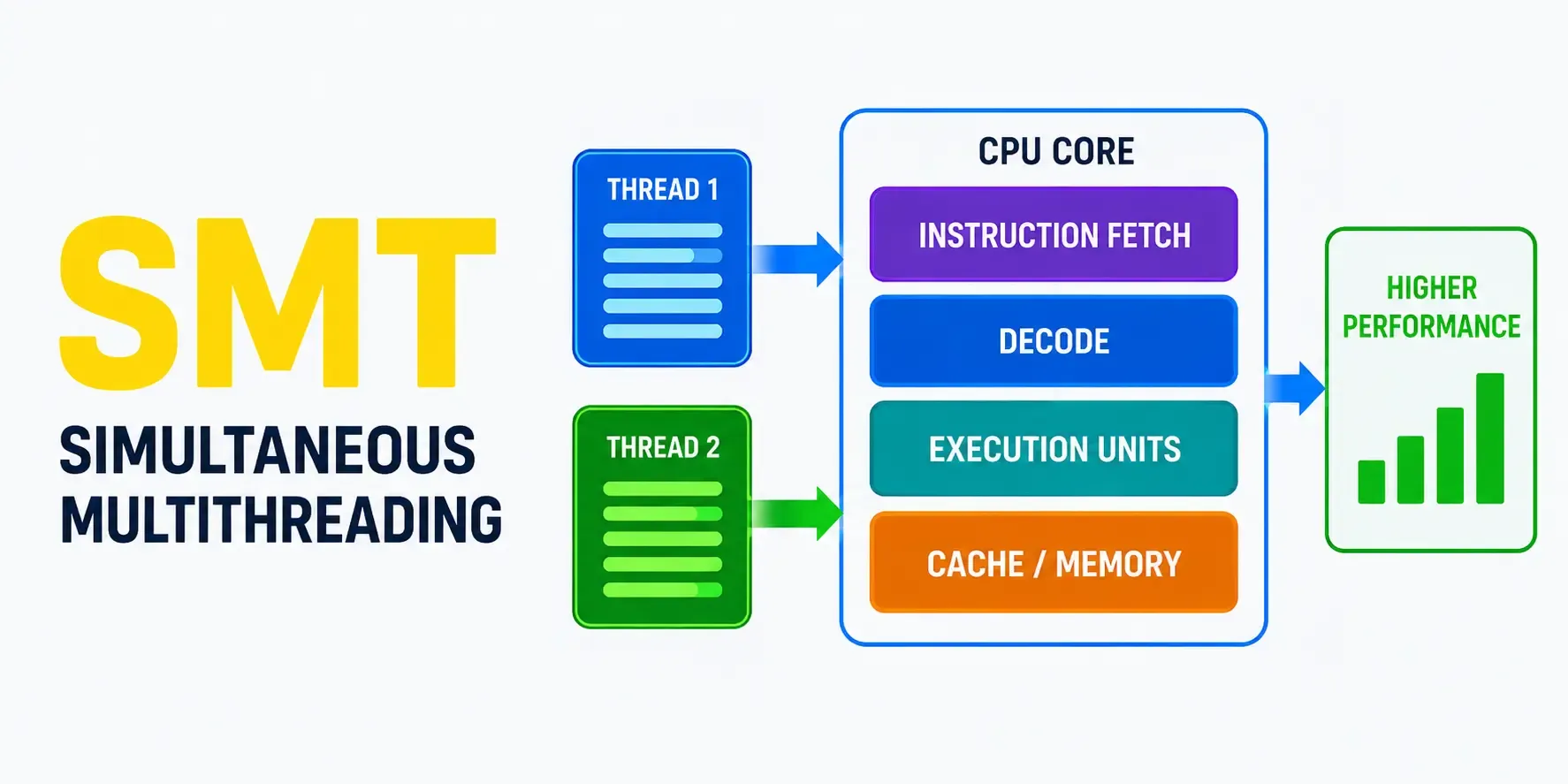
SMT stands for Simultaneous Multithreading. It is a clever trick computer processors use to do more work at the same time. Normally, one part of the computer's brain, called a core, handles one task at a time. But with SMT, one core can handle two tasks at once. It is like having one chef in a kitchen who is chopping vegetables while also waiting for a pot of water to boil. Instead of just standing there waiting, the chef uses that spare time to get something else done. This makes the whole computer run faster and smoother without needing extra hardware parts.
How SMT Works Inside Your Computer
To understand how SMT works, think about a factory assembly line. A modern computer core is like a very advanced factory that has multiple stations to build things. However, a single software program, or thread, often cannot keep all those stations busy at once. Sometimes the program has to wait for data from the memory. SMT fixes this by duplicating only the tiny storage areas and instruction pointers that keep track of a task. The main heavy tools, like the math calculators and the memory cache, are shared between the tasks. When task A is waiting for something, task B steps in and uses the tools. Because of this, the computer parts are almost always doing useful work instead of just sitting idle.
The Difference Between SMT and Hyper-Threading
People often get confused by the different names used for this technology. The truth is, Hyper-Threading is just the brand name Intel uses for SMT. Intel introduced this feature back in 2002 on their Pentium 4 processors. AMD, on the other hand, just calls it SMT. Both companies do the exact same thing under the hood. They take one physical core and split it into two logical cores. The operating system sees these logical cores as real cores and sends work to them. So, if you have a four-core processor with SMT, your computer will think it has eight cores, even though it only has four physical ones doing the heavy lifting.
The Benefits of Simultaneous Multithreading
The biggest benefit of SMT is that it increases the overall speed and efficiency of your computer. For tasks like video editing, 3D rendering, or running large databases, SMT can give you a nice boost, sometimes making things up to thirty percent faster. It helps the processor use its resources fully without wasting electricity. Since the physical core is already turned on and running, adding a second thread does not use much extra power. It is a very smart way to get more performance out of the same piece of hardware. For servers and power users, this means finishing jobs much quicker and saving money on energy bills.